Samuel Ajayi Crowther: The man who reshaped Yoruba history
Born in Osogun in present-day Nigeria, Samuel Ajayi Crowther survived enslavement to become the first African Anglican bishop in 1864, and gave the Yoruba language one of its first written foundations.

- Published
- Reading time
- 3 minutes
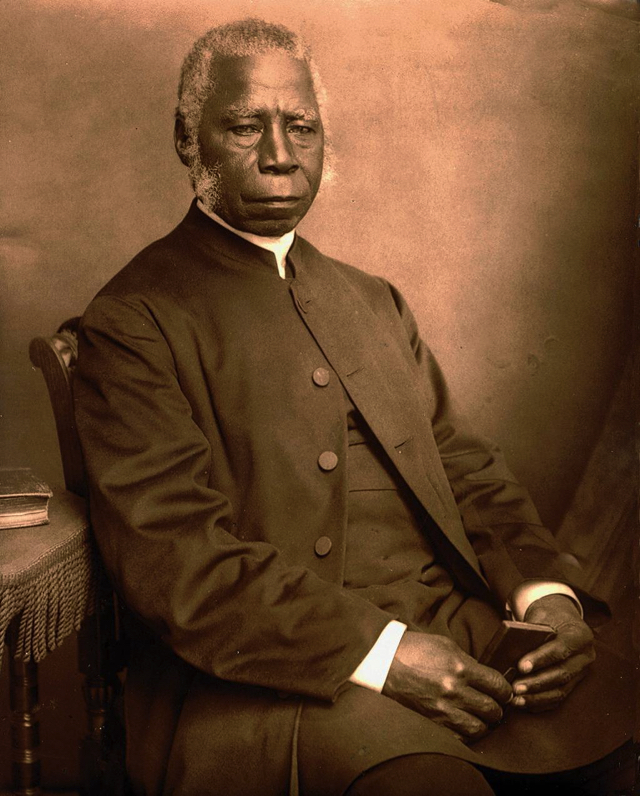
Samuel Ajayi Crowther was born in Osogun, in what is now Oyo State, Nigeria. Enslaved as a boy, he went on to become a linguist, teacher and clergyman, and in 1864 the first African bishop of the Anglican Church. His work on the Yoruba language still shapes how the language is written today.
Early life and enslavement
Ajayi was born around 1809 into a region torn apart by the transatlantic slave trade. When he was about twelve, raiders seized him and he was sold and resold. At one point he was exchanged for a horse. Facing transport to Popo, in what is now Togo, he later described being so desperate that he contemplated taking his own life.
He was traded again, this time for rum and tobacco, and placed aboard the Portuguese slave ship Esperança Felix, bound for Lagos.
Rescue and Freetown
On 7 April 1822, the Royal Navy sloop HMS Myrmidon, under Captain Henry Leeke and part of Britain’s anti-slavery West Africa Squadron, intercepted the Portuguese ship. Ajayi and many other captives were freed.
They were landed at Freetown, Sierra Leone, a settlement for liberated Africans. Elsewhere on the coast, freed captives returned to local rulers were at risk of being sold again, whereas Freetown offered a measure of real freedom. It was there that his education began. He was baptised in December 1825 and took the name Samuel Crowther, after a leading member of the Church Missionary Society (CMS).
Education and ordination
The CMS sent him to England to continue his studies. He worked in Hebrew, Greek, Latin and his native Yoruba, and was ordained in 1843. His speeches carried the weight of lived experience as a survivor of slavery, and his appeals for justice and equality made a deep impression on audiences in Britain.
An audience at Windsor
On 18 November 1851, Crowther was received at Windsor Castle by Prince Albert and Queen Victoria. He described the process of enslavement and the atrocities he had witnessed. The Queen asked what could be done about slavery on the West African coast. According to the account passed down, he answered: “Seize Lagos by fire, by force.” Lagos was taken by British forces the following month, and his testimony is often cited as part of the pressure that led to that intervention.
First African Anglican bishop
On 29 June 1864, in Canterbury Cathedral, Crowther was consecrated bishop, the first African to hold that office in the Anglican Church. The same year, Oxford University awarded him an honorary doctorate. For many people he became a symbol of what African leadership in the church and in education could achieve.
Language and legacy
Crowther’s most lasting contribution was linguistic. His work on Yoruba, including a published vocabulary of the language in 1852 and his translation of the Bible, helped fix a written form of the language and promoted literacy among Yoruba speakers. He died in Lagos on 31 December 1891.
Further reading
- Dictionary of African Christian Biography, entry on Samuel Ajayi Crowther (dacb.org)
- Andrew Walls, “Samuel Ajayi Crowther (1807–1891): Foremost African Christian of the Nineteenth Century”, International Bulletin of Missionary Research, 1992